Central Florida’s average humidity stays well above 60% year-round, and your HVAC system runs to compensate for it almost every day. That combination is exactly what we find when we inspect ductwork in Maitland homes: attic ducts pulling in warm, humid air through degraded insulation, mold spores settling where airflow slows, and a season’s worth of pollen that filtered through everything except the system components designed to catch it.
We’ve provided air duct cleaning in Maitland across homes of all ages, and the pattern holds. The older the home — particularly anything built before the early 2000s — the heavier the allergen load tends to be. Those ducts don’t clean themselves.
TL;DR Quick Answers
Air Duct Cleaning in Maitland
Our team provides air duct cleaning in Maitland, FL, following NADCA's ACR Standard on every job. Our technicians serve Orange County homeowners using negative pressure and HEPA-filtered vacuum extraction to remove dust mites, mold spores, pet dander, and pollen from residential duct systems. We recommend scheduling an inspection every three to five years — or sooner for homes with pets, recent renovations, or visible dust buildup at the vents.
Top Takeaways
Maitland’s subtropical climate keeps pollen, mold, and dust mite activity elevated year-round, making duct contamination more likely here than in drier regions.
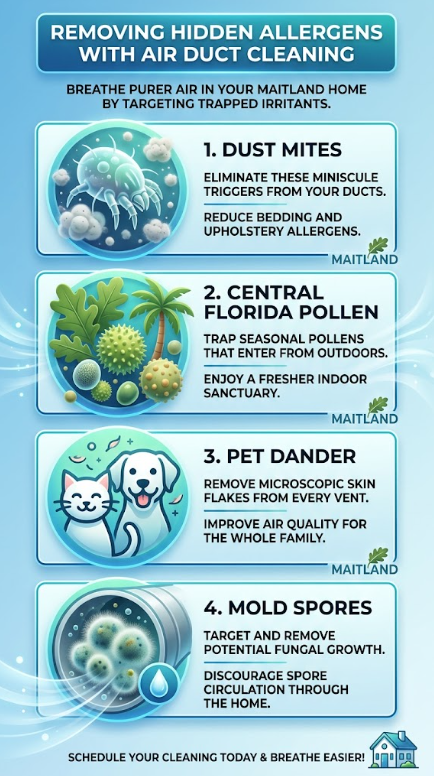
Common allergens found in residential ductwork include dust mites, mold spores, pet dander, pollen, and fine construction debris left behind in older building materials.
Professional duct cleaning uses source-removal methods (negative pressure combined with mechanical agitation) rather than surface-level vacuuming.
The Florida DBPR licenses HVAC contractors operating in the state; homeowners can verify any company’s credentials at MyFloridaLicense.com before scheduling service.
NADCA-member companies follow the ACR Standard, the internationally recognized benchmark for HVAC inspection, cleaning, and restoration. Verify membership at nadca.com.
What’s Actually Living in Your Ducts
Most homeowners treat their air ducts the way they treat the inside of their walls: once they’re sealed up, they stop thinking about them. In our experience across Central Florida homes, that’s exactly why duct systems collect as much as they do.
Mold spores arrive through the air handler before your filter catches them. Dust mites settle where humidity stays high, which in Maitland means practically every month of the year. Pet dander collects in supply and returns plenums where airflow slows. Oak pollen, which Orange County gets a heavy load of each spring, finds its way through gaps around register boots and builds up over seasons. Homes that have had renovation work done carry an additional layer of fine drywall dust and construction particulate that standard filters weren’t built to catch in bulk.
None of this is unusual. It’s the natural result of running forced-air HVAC in a Florida climate. The problem comes when you run that system day after day without addressing what’s settled inside the ducts.
Why Central Florida Homes Are Especially Vulnerable
Maitland sits at the intersection of two conditions that make duct contamination more likely here than in drier climates: high relative humidity and continuous HVAC operation. When indoor humidity climbs above 50% inside ductwork, which happens in poorly sealed systems, mold spores have what they need to take hold on interior duct surfaces.
We see this most often in homes built before the early 2000s, where ductwork runs through unconditioned attic space and insulation has degraded enough to allow temperature swings that cause condensation on the duct exterior. That moisture works its way in over time.
Year-round air conditioning also means there’s no off-season for the HVAC system. Filters catch what they’re rated to catch. What bypasses the air filter or settles downstream from it stays in the duct system until something removes it.
How Professional Duct Cleaning Works
A proper air duct cleaning, done to NADCA’s ACR Standard, follows a specific sequence. We start with a visual inspection, using cameras or inspection mirrors to assess the duct interior’s condition before any work begins.
From there, the technician brings the system under negative pressure with a high-powered HEPA-filtered vacuum. Agitation tools (brushes, air whips, or compressed air nozzles) dislodge debris from duct walls, and the vacuum captures it rather than redistributing it through your home. We clean supply and return ducts, plenums, air handler components, and register grilles. Every component in the system’s airpath gets covered.
The EPA notes that an inadequate vacuum collection system can release more dust and dirt than it captures, which is why equipment quality and proper containment matter as much as the cleaning itself.
What to Expect After Cleaning
We won’t tell you that getting your ducts cleaned will eliminate your allergies. The science on that claim is more complicated than some companies make it sound. What we can tell you, based on our work in Central Florida homes, is that removing an accumulated layer of biological debris from your duct system addresses one real contributor to poor indoor air quality.
Homeowners we’ve worked with in Maitland often notice that their HVAC filter loads more slowly after a cleaning, which tells us the system is moving less loose debris. Homes with pets, family members with respiratory sensitivities, or systems that haven’t been inspected in several years are worth a conversation.
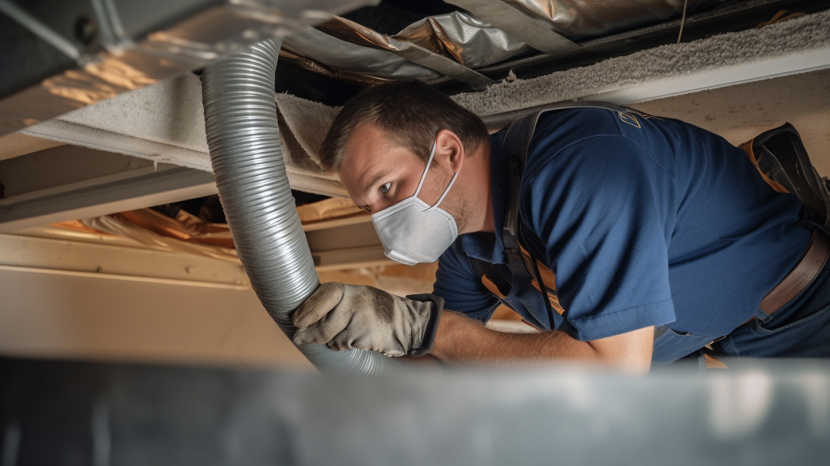
“What we find most often in Maitland homes is that the attic ductwork has been pulling in humidity for years without anyone realizing it. By the time a homeowner notices the dust buildup at their vents, the inside of the system has already been working as a collection point for allergens for a long time.”
7 Essential Resources
1. EPA — Indoor Air Quality (IAQ) Overview
The EPA’s central hub for indoor air quality guidance, covering allergen sources, ventilation, and HVAC filtration.
2. EPA — Should You Have the Air Ducts in Your Home Cleaned?
Official EPA guidance on when duct cleaning is warranted, what the process involves, and how to choose a qualified contractor.
3. EPA — Improving Indoor Air Quality
Practical EPA strategies for reducing indoor pollutants through source control, ventilation, and filtration improvements.
4. EPA — Introduction to Indoor Air Quality
Background on indoor pollutant sources, exposure pathways, and health effects for homeowners and building occupants.
5. NADCA — National Air Duct Cleaners Association
The industry trade association that sets the ACR Standard for HVAC cleaning and restoration and maintains a directory of certified member contractors.
6. Maitland, Florida — Wikipedia
Geographic, demographic, and historical reference for Maitland, an incorporated city in Orange County, Florida.
7. Florida DBPR — Contractor License Verification (MyFloridaLicense.com)
The Florida Department of Business and Professional Regulation’s official license lookup tool for verifying HVAC contractor credentials in the state.
3 Supporting Statistics
1. More than 100 million Americans live with allergies.
Most common indoor triggers: dust mites, mold spores, and pet dander.
These are the same contaminants we pull from Maitland duct systems.
Every time the HVAC runs, they recirculate through the home.
Source: Asthma and Allergy Foundation of America — Allergy Facts
2. The CDC recommends keeping indoor humidity below 50% to prevent mold growth.
In Central Florida, that standard is difficult to maintain without properly sealed ductwork.
A 2004 IOM study, cited by the CDC, linked indoor mold exposure to respiratory symptoms in otherwise healthy people.
We regularly find humidity above that threshold in attic duct runs and plenums on Maitland service calls.
Source: U.S. CDC — Mold and Health
3. Dust mites grow most efficiently at warm temperatures with humidity above 50%.
Both conditions are standard in a Central Florida attic.
The CDC/ATSDR identifies dust mite sensitization as a top indoor risk factor for asthma development and exacerbation.
In our experience across Maitland homes, the heaviest biological buildup shows up in ductwork running through unconditioned attic space. That's exactly what the research predicts.
Final Thoughts and Opinion
Most homeowners don’t ask us how duct cleaning works. They want to know whether they actually need it. That’s the honest question, and it deserves a direct answer.
In Maitland, where the climate keeps HVAC systems running nearly every day of the year and humidity creates biological risk that most homeowners don’t see coming, any system that hasn’t been inspected in several years is worth a look. Not every home needs immediate service. Homes with aging ductwork, visible dust buildup at the vents, or residents with respiratory conditions are the reasonable starting points.
Our position on this is straightforward: don’t clean ducts on a fixed schedule just because someone told you to. Inspect first, clean when the evidence supports it, and work with a contractor who can show you what’s inside the system before and after the job. That’s what we do on every call in Maitland — and it’s what every homeowner here deserves from an air duct cleaning company.
A clean duct system also makes your air filter work the way it’s supposed to. A quality filter does far less for you when the ductwork behind it is already loaded with debris. Cleaning the ducts and staying on a good filter schedule together give your system the best chance of doing what it was built to do.
Frequently Asked Questions
How much does air duct cleaning cost in Maitland, FL?
Price depends on your home's square footage, the number of supply and return vents, the condition of the ductwork, and whether additional services like coil cleaning or sanitization are included. Always ask for a written estimate after an inspection of the system — a contractor quoting without looking first isn't giving you a real number. Be cautious of unusually low offers; they typically mean part of the job isn't getting done.
How do I find a reputable air duct cleaning company in Maitland?
Look for contractors with NADCA membership, which requires at least one certified Air System Cleaning Specialist (ASCS) on staff. You can also confirm that any HVAC contractor working in Florida holds an active license through the Florida Department of Business and Professional Regulation at MyFloridaLicense.com. Ask for a written scope of work before the job starts and request before-and-after documentation. A contractor who does the work right won’t have any reason to avoid showing you what they found.
How often should ducts be cleaned in a Central Florida home?
NADCA recommends regular HVAC system inspections, with cleaning typically warranted every three to five years depending on system condition, home use, and local environmental factors. In Central Florida, where continuous A/C operation and high humidity give biological contaminants year-round opportunity to build up in ductwork, we recommend scheduling an inspection if it’s been three or more years since the last cleaning, or if you’ve recently completed renovation work inside the home.
Will duct cleaning reduce my allergies?
Professional duct cleaning pulls out the allergens that have settled inside your duct system: dust mites, mold spores, pet dander, and pollen. Left alone, they keep cycling through your home’s air every time the system runs. The EPA notes that duct cleaning has not been shown to conclusively prevent health problems, and individual results vary. Removing a documented source of airborne irritants is a reasonable step for households dealing with respiratory sensitivities, and many Maitland homeowners find it worthwhile alongside regular filter maintenance.
Does Filterbuy HVAC Solutions offer air duct cleaning services in Maitland?
Yes, we serve Maitland and the greater Orlando area. Review our service details and request a quote on our Maitland air duct cleaning service page.
Hidden Allergens Don't Clear on Their Own
Our team serves Maitland and Orange County with NADCA-standard duct cleaning, and we give every homeowner an honest picture of what we find before any work begins. Schedule your inspection to see what's in your ductwork.
Here is the nearest branch location serving the Hialeah FL area…
Filterbuy HVAC Solutions - Miami FL
1300 S Miami Ave Unit 4806, Miami, FL 33130, United States
(305) 306-5027